

Do Women and Girls Know Their Maternal Health Rights?
How often do we hear stories of women and girls entering healthcare facilities with dreams of a safe childbirth, only to face mistreatment or abuse? Too many times, these hopeful journeys turn into distressing experiences. Consider the heartbreaking cases of women who, after delivering healthy babies, find themselves detained in hospitals over unpaid bills—held captive by a system that prioritizes payment over care. Or the troubling instances where women undergo risky surgical procedures without their consent, simply because a health care worker decides it is best without offering alternatives or even a thorough explanation.
Where do we go wrong?
This question looms large, particularly when we consider the Respectful Maternity Care (RMC) Charter, which is designed to protect the rights of women and newborns. Do women and girls even know that this document exists? Are key players in maternal and newborn health—midwives, policymakers, human rights advocates (just to mention a few)—aware of the universal rights enshrined in the RMC Charter?
White Ribbon Alliance Kenya’s Spotlight on the RMC Charter – A National Dialogue
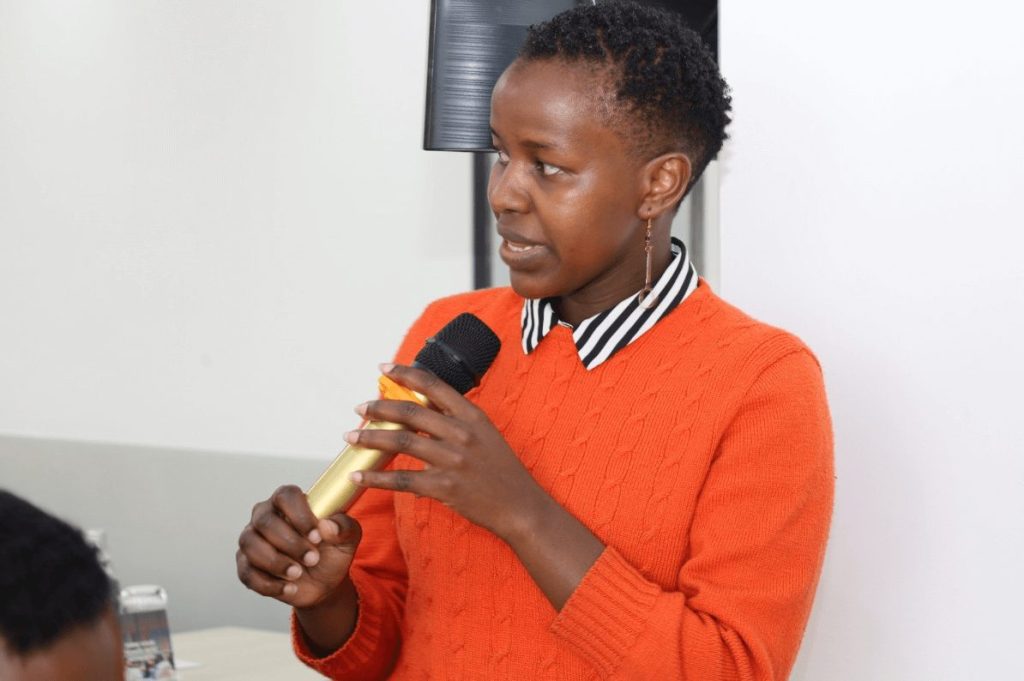
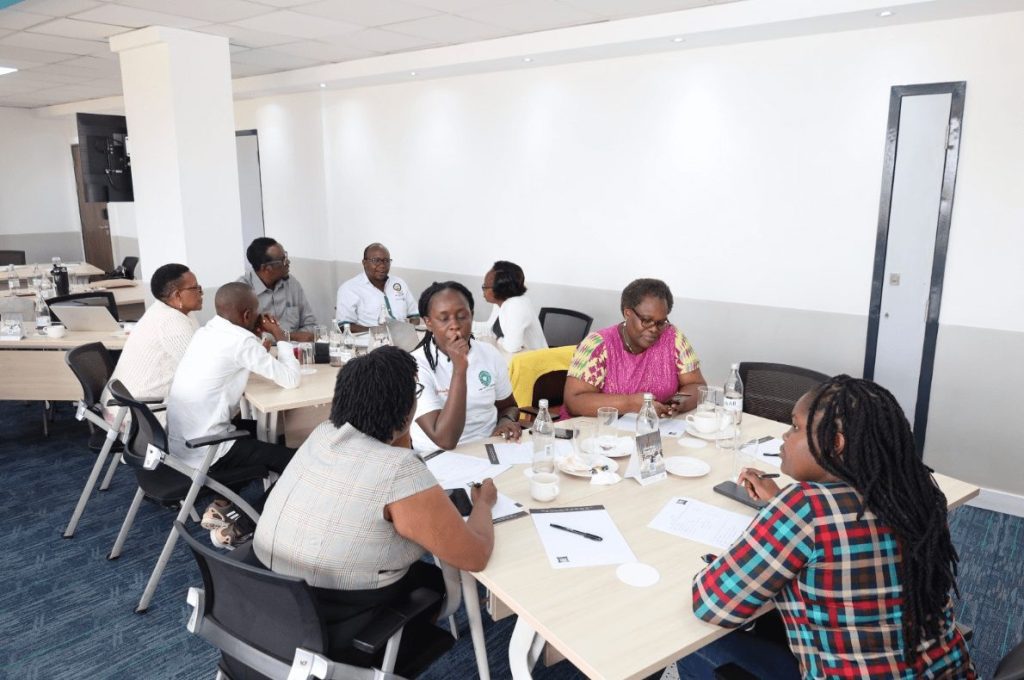
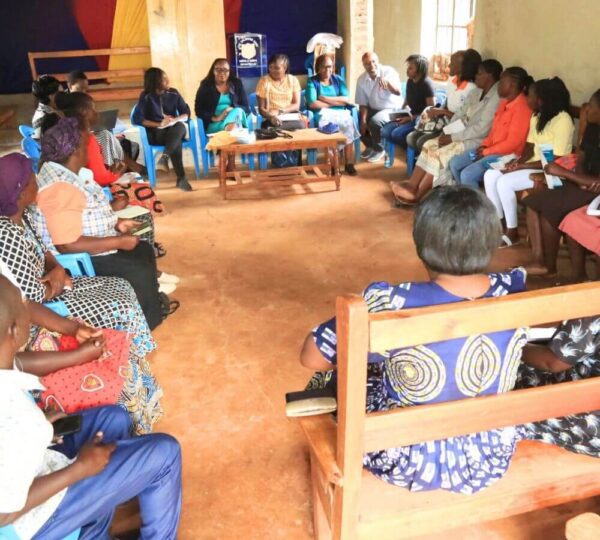
On September 27th, White Ribbon Alliance (WRA) Kenya convened participants, including representatives from the County Health Management Team, healthcare practitioners, NGOs, CBOs, and organizations for people living with disabilities in a national stakeholder’s dialogue. This powerful dialogue sought to uncover the deep-rooted gaps in respectful maternity care across the country and to foster discussions on raising awareness about the universal rights outlined in the RMC Charter.
As the dialogue unfolded, it became painfully clear: awareness of the RMC Charter and its provisions is alarmingly low among all stakeholders. One vital question was posed: How can we protect the maternal needs of women and newborns if we do not even know their rights?
Provisions of the RMC Charter
On September 27th, White Ribbon Alliance (WRA) Kenya convened participants, including representatives from the County Health Management Team, healthcare practitioners, NGOs, CBOs, and organizations for people living with disabilities in a national stakeholder’s dialogue. This powerful dialogue sought to uncover the deep-rooted gaps in respectful maternity care across the country and to foster discussions on raising awareness about the universal rights outlined in the RMC Charter.
As the dialogue unfolded, it became painfully clear: awareness of the RMC Charter and its provisions is alarmingly low among all stakeholders. One vital question was posed: How can we protect the maternal needs of women and newborns if we do not even know their rights?
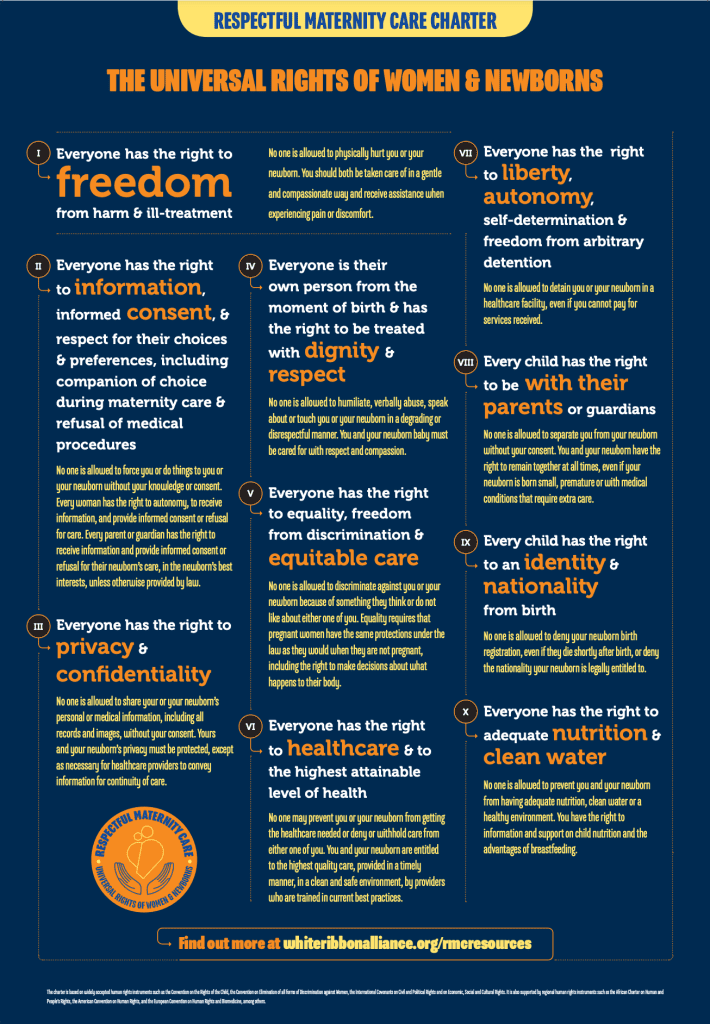
The RMC Charter articulates ten fundamental rights, which ensure that all women and girls receive dignified and respectful care during childbirth. These rights include:
-
-
- Right to information, informed consent, and respect for women’s choices.
- Right to freedom from harm and ill-treatment.
- Right to privacy and confidentiality.
- Right to be treated with respect and dignity.
- Right to equality and equitable care.
- Right to the highest attainable level of health.
- Right to liberty and freedom from arbitrary detention.
- Right for every child to be with their parents or guardians.
- Right to an identity and nationality from birth.
- Right to adequate nutrition and clean water.
-
Gaps We Must Address
The landscape of maternity care in Kenya is plagued by significant gaps that violate the fundamental rights outlined in the RMC Charter. Women enter healthcare facilities, hopeful for a safe delivery, only to encounter an unacceptable reality where their rights are routinely and regrettably overlooked. Many women remain unaware of their maternal health rights, which opens the door to coercion and mistreatment. Financial barriers leave some mothers vulnerable to detention for unpaid bills, while marginalized communities (including women living with disability) continue to face discrimination, resulting in substandard care. Moreover, a widespread lack of training among healthcare providers perpetuates harmful practices, undermining the very principles of RMC. Together, these multitude of challenges create a daunting environment for women, a justification for the urgent need for systemic change.
As the dialogue unfolded, it became painfully clear: awareness of the RMC Charter and its provisions is alarmingly low among all stakeholders. One vital question was posed: How can we protect the maternal needs of women and newborns if we do not even know their rights?
Call to Action: We must act now!
Through this timely stakeholders’ dialogue, a consensus emerged: achieving Respectful Maternity Care requires collaboration across individual, community, and systemic levels. While investments in RMC initiatives have been made, significant policy implementation gaps persist, with a lack of accountability evident across all levels of governance and service delivery.
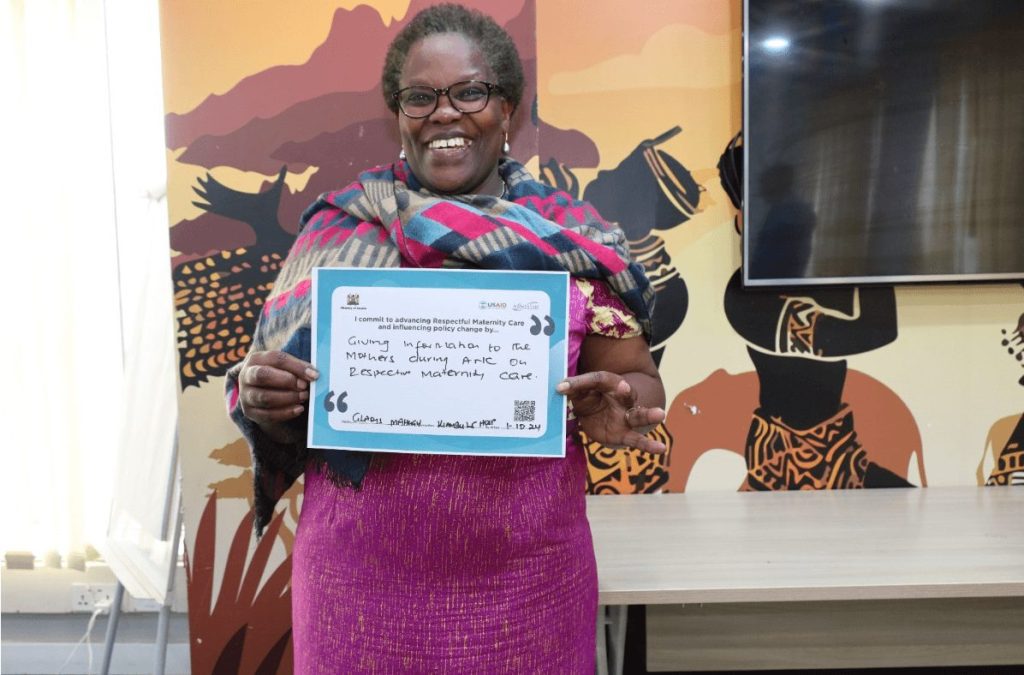
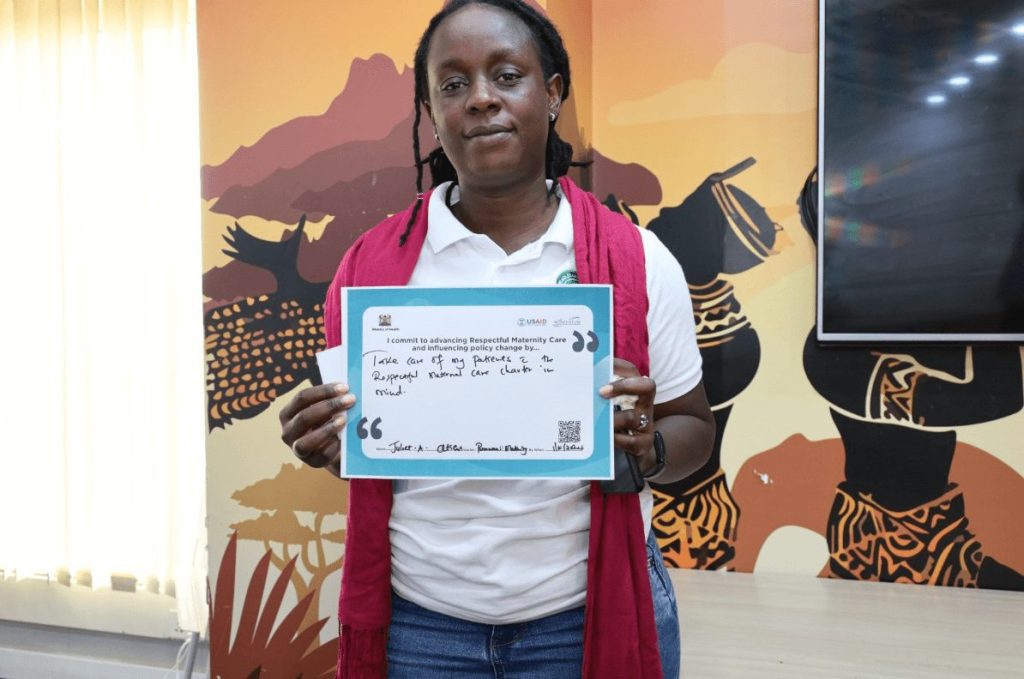
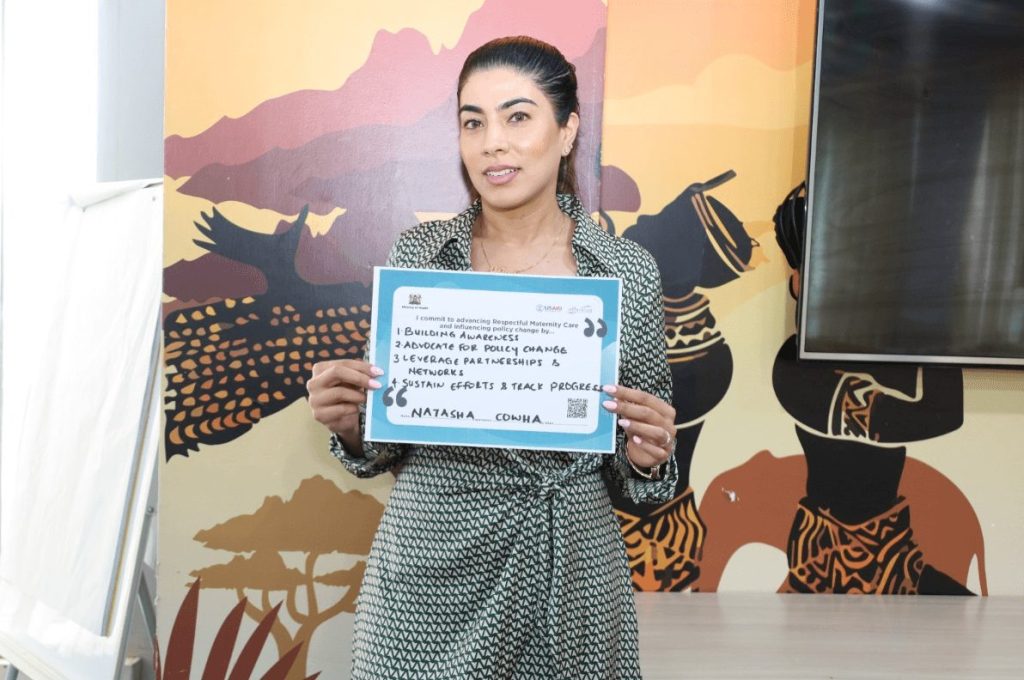
Every participant committed to incorporating the ten key guidelines of the RMC Charter into their daily practices, fostering an environment where respectful maternity care and self-care thrive. The journey toward maternal health equity in Kenya is a shared responsibility—one that demands immediate action and unwavering commitment. Together, we can ensure that every childbirth experience is marked by respect, dignity, and informed choice. In a world where maternal health should be celebrated, we must ask ourselves: Are we doing enough to understand and uphold the rights of women and girls? The time for action is now.
As the dialogue unfolded, it became painfully clear: awareness of the RMC Charter and its provisions is alarmingly low among all stakeholders. One vital question was posed: How can we protect the maternal needs of women and newborns if we do not even know their rights?