



From Struggle to Strength: A Journey of Hope for Kenyan Mothers and Newborns
Beatrice Naliaka, 17, stands at a crossroads in a remote village in Bungoma. Expecting her first child, she feels the weight of uncertainty pressing down on her. With no clear path to safe delivery, she grapples with fears about adolescent motherhood, all while trying to take care of herself amidst societal barriers and health disparities. Her pregnancy, born from a moment of unintended consequence, has opened a floodgate of worries—about her health, her baby’s health, and the support she may not have.
Meanwhile, in the arid landscapes of Kajiado, Annita Soila, 37, another expectant woman sets off for a 15 kilometres journey to the nearest dispensary. She has been feeling unwell, and for three days, her baby has not kicked. With each step, she hopes to find answers and reassurance about her due date. The journey is long, but the stakes are even higher—her baby’s life and her own depend on the care she seeks.
In the bustling Nairobi city, a new mother in the informal settlements of Kariobangi wakes up before dawn. Just a week postpartum, Zipporah Wangu, 25 leaves her baby swaddled in an old shawl—a gift from a friend—to wash clothes in a neighbouring suburb. Every coin she earns is crucial for food and necessities. Wangu will need to share her meager earnings with her neighbour, who she leaves to watch over her newborn. The reality of motherhood is harsh, and her heart aches as she strives to provide for herself and her newborn. These three women, living in different contexts, share a common thread—motherhood. Yet, do they know the power of their voices? Are they aware of their rights? For many, the answer is no.
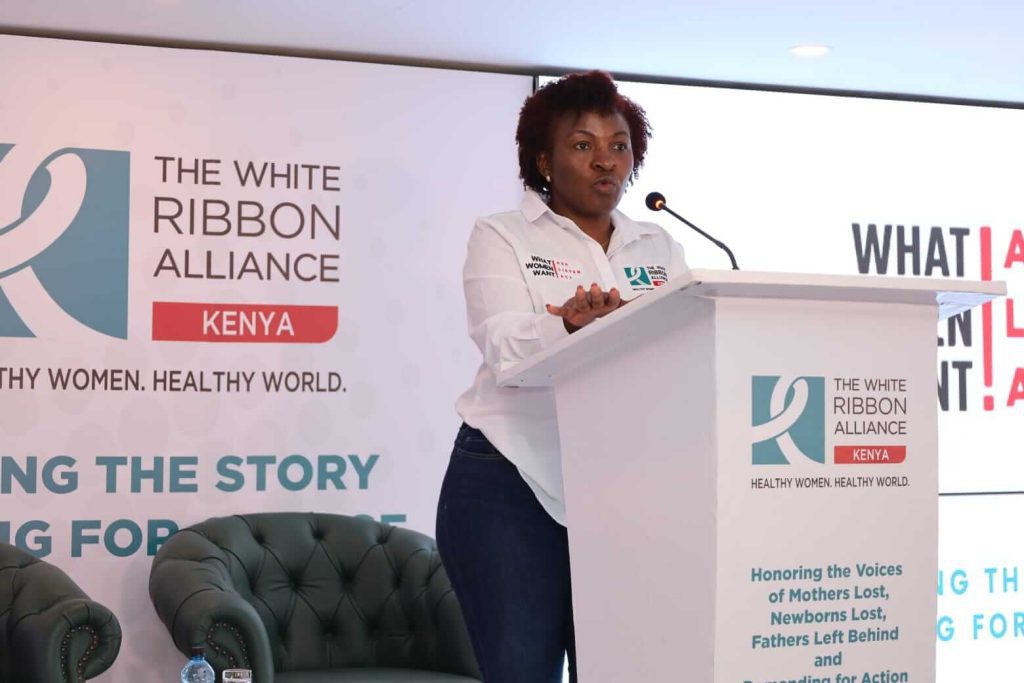
Angela Nguku, the Executive Director, WRA Kenya flags off the launch of Silent Tears, a Caebook on maternal and newborn loss
Fifteen years ago, Angela Nguku, the Founder and Executive Director of White Ribbon Alliance Kenya (WRA Kenya), and a formerly practicing midwife, saw these struggles and envisioned a solution. Thus, WRA Kenya was born—a movement dedicated to ensuring that every mother and newborn can thrive, free from the challenges that threaten their well-being. WRA Kenya recognizes the unique struggles faced by marginalized mothers—those with disabilities, the economically disadvantaged, and adolescent mothers, just to mention a few—and works tirelessly to bring their stories to light. The organization promotes quality, equity, and dignity in reproductive, maternal, and newborn health (RMNH) by leveraging its unparalleled ability to mobilize grassroots women and girls in their diverse experiences, connecting them with national and global actors to advocate for their rights and advancing accountability for RMNH to decision-makers at all levels.
At the heart of WRA Kenya’s mission are three powerful pillars: Self Caring, Self Advocating, and Self Organising. Through promoting health literacy and encouraging healthy behaviours, WRA Kenya empowers mothers and newborns to take charge of their health. This approach transforms communities into informed decision-makers, ensuring that maternal and newborn health services are not only accessible but culturally appropriate as well.
But the journey does not end there. WRA Kenya believes in the strength of collaboration. By forming intentional partnerships with key stakeholders, WRA Kenya amplifies the voices of women and creates robust connections between communities and decision-makers in maternal and newborn health.
By reclaiming their narratives, women can advocate for their rights, needs, and aspirations in a way that resonates with their unique experiences. This is why WRA Kenya employs a simple yet effective strategy: ‘The Power Approach’. Through three essential steps—Ask, Listen, Act—we address the urgent health challenges faced by mothers and newborns everywhere.

WRA Kenya’s Power Approach
Now, imagine the impact of WRA Kenya’s efforts on our three mothers:
In Bungoma, the Naliaka discovers a community health worker trained by WRA Kenya on Respectful Maternity Care and Self Care who provides her with crucial information about prenatal care and safe delivery options. She learns about her rights and the services available to her, spurring her to seek the care she needs. As her due date approaches, she feels more prepared, knowing she has the support of her community and the knowledge to advocate for herself and her baby.
In Kajiado, Soila finds solace in a health facility – this is after she is guided by one of WRA Kenya’s grassroots, champions whom she meets on her way to the dispensary. The champion, trained on fundamental aspects of maternal health, walks the woman to the facility where compassionate staff have been trained to prioritize maternal health. Upon arrival, she is welcomed with care and understanding. Her concerns are listened to, and she receives the medical attention she desperately needs. With her worries eased, she leaves the facility confident about her due date and her baby’s well-being.
In Nairobi, Wangu joins a local chama – a women’s group. Here, she connects with other mothers who share her struggles and experiences. They discuss practical solutions for affordable childcare, access to basic necessities, and ways to advocate for better support from local authorities. On top of this, the WRA Kenya team trains them on financial literacy and gives them financial support to start an income generating venture. This newfound network uplifts her, providing both emotional support and practical resources, helping her navigate the challenges of motherhood.
WRA Kenya is leading a revolution, by igniting the power inherent in women and girls. Together with the women, girls, newborns and their families we are raising our voices demanding for change. We need your voice too.
As a supporter of maternal and newborn health, your involvement is crucial. Be part of the solution by advocating for policy changes, joining community discussions, and amplifying the stories of those who often go unheard. Together, we can dismantle the barriers and build a future where every woman has the agency, resources, and support she needs to take care of her health and that of her newborn.
Join White Ribbon Alliance Kenya in this vital journey. Stand up for maternal and newborn care as a fundamental right. Together, let’s create a healthier, more equitable future for mothers and newborns across Kenya.
Your action can make a difference—be part of the change!
Watch the documentary


